Are Hunter Douglas Silhouette Shades Worth It?
Silhouette is worth it when the job is soft light, a kept view, and daytime privacy in a room you live in daily. It is not worth it for blackout, insulation, or the lowest price, and not anywhere it can be splashed. A dealer who has owned Silhouette gives the full working, including the night privacy answer most pages get wrong.
By Mark Abplanalp
The short answer: yes, for the right windows, and no for the wrong ones, and this article will tell you which are which. Silhouette is worth its premium price when the job is softening harsh light, keeping your view to the outside, and holding your privacy during the day in a room you actually live in. It is not worth it when the job is blacking out a bedroom, insulating a cold window, or covering glass for the lowest possible price. And there is one placement a dealer who has owned Silhouette will talk you out of entirely: anywhere the fabric can get splashed. What follows is the working behind that answer. What the money buys, what it costs in our own published ranges, the night privacy question answered honestly, and a verdict from someone who chose this product for his own home.
What you are actually paying for
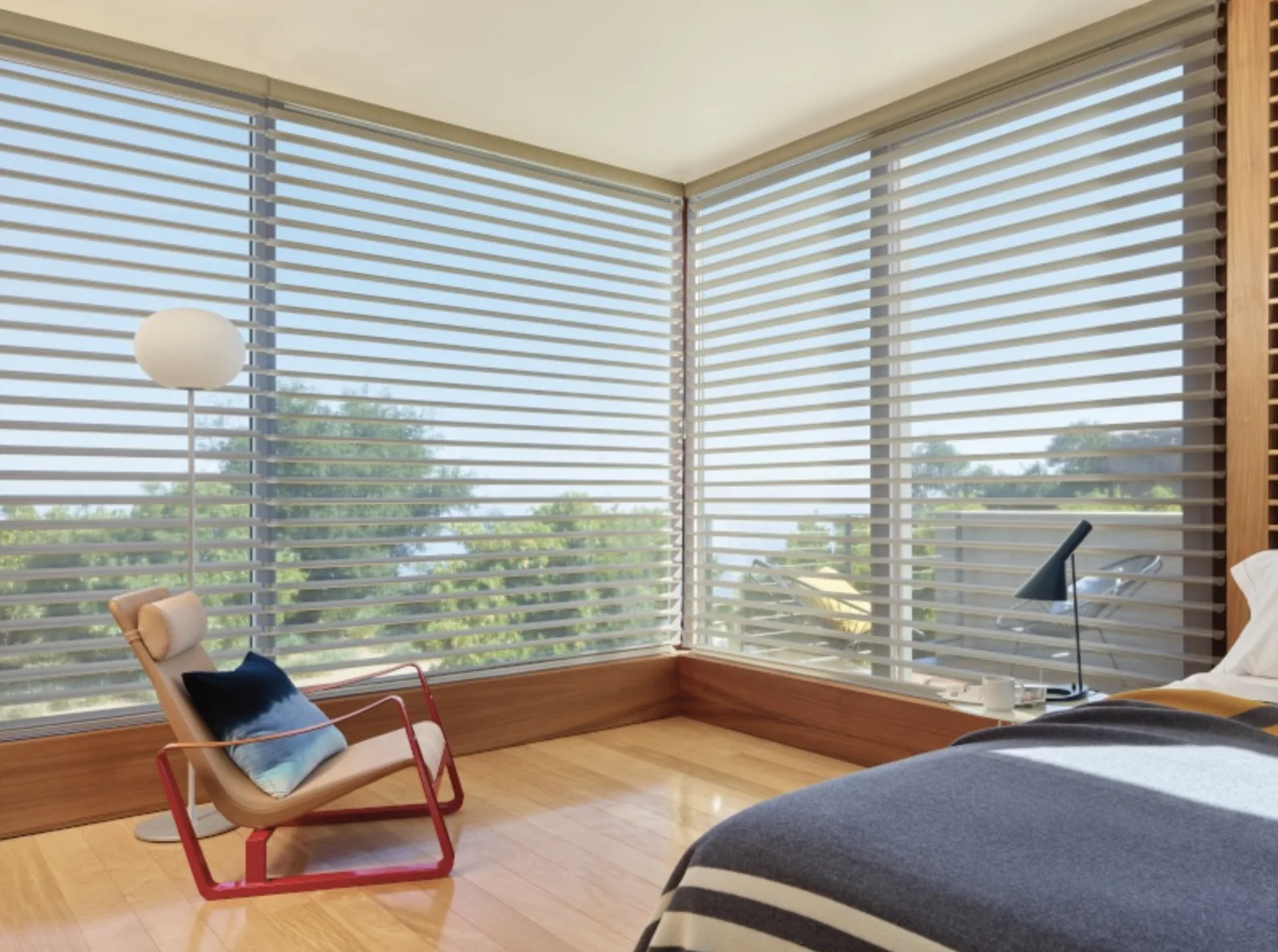
Silhouette's S-shaped fabric vanes float between two sheer panels, one in front and one behind. Tilt the vanes and the sheers diffuse the incoming light, spreading it through the room as a soft glow instead of glare, while you keep your view out. Hunter Douglas describes the result as filtered light and a daytime view, while maintaining your privacy. That combination is the experience: soft light, your view out, and privacy during the day, all at once, without making the room feel closed in.
Other brands make sheer shadings in the same style today, and pretending otherwise would be a poor start to a worth-it article. The honest differences are the ones a dealer can show you in the samples: Hunter Douglas offers the choice of three vane sizes, 2, 3, and 4 inches, and its fabrics are a step above the rest, in depth and in quality. That range, more than the basic design, is what the premium buys.
The vane size changes the view more than people expect. Larger vanes mean fewer horizontal lines crossing your glass, and Hunter Douglas rates the 4 inch vane as offering the best view-through in the line. ClearView sheers are available when maximum view-through matters most. Around that construction sits one of the deepest fabric libraries Hunter Douglas makes, more than 150 fabrics and colors, so the shading can disappear into a room's palette or carry it.
The sheers also do quiet work while the light comes in: Hunter Douglas designs them to help keep furniture and flooring from fading. When you want the glass completely clear, the shading rolls up into its fabric-wrapped headrail and disappears. And the product is built for the large windows so many newer homes have, reaching up to 136 inches tall, about 11 feet, in its largest configuration. Silhouette is also available with PowerView motorization, which tilts the vanes and raises the shading by remote, app, or schedule. On this product, that option changes how much of the shading you actually use, and it comes back in the owner's verdict below.
What Silhouette costs
Our Hunter Douglas cost guide publishes the ranges, and this article stays inside them. For standard window sizes, Silhouette runs about $500 to $1,400 per window depending on size and fabric. Manual versions at standard sizes land around $500 to $750 per window, and motorized versions around $800 to $1,100. PowerView motorization adds roughly $300 to $600 per window over the same shade operated manually, and our PowerView guide covers what that money buys.
Size is the biggest driver, and it is not close. One Portland dealer publishes installed Silhouette pricing of $2,400 to $3,900 for a single 60 by 72 inch window. That is the same product line as a bedroom Silhouette at the low end of the range, with several times as much of it in the opening. So the worth-it question cannot be answered from a price tag alone. It has to be answered per window, which is why every figure here is a planning range and the real number comes after measuring.
Here is the honest way to weigh it. You are paying for the choice of three vane sizes, one of the deepest and best fabric libraries in the industry, and a shading that gets used all day because it never forces a choice between light and view. On a window that earns its keep in your daily life, that premium buys something real. On a window that does not, the same money is wasted, and the next sections name those windows.
Can you see through Silhouette shades at night?
This is the most searched question about Silhouette after price, and it is the one most pages answer badly, because the honest answer has two halves.
First, notice what Hunter Douglas itself claims. The Silhouette page promises daytime privacy. It does not claim night privacy for the standard product, and that restraint is the clue.
With the vanes open at night and the lights on inside, you do not have privacy. A Silhouette with open vanes is a sheer, and from outside, shapes and movement read through it. Anyone who tells you otherwise is selling, not informing.
With the vanes closed, the answer flips. Privacy rises sharply, and for most fabrics it stops being a concern. The owner of Luxe Window Works has lived with Silhouette in his own home, and his verdict is the plainest version of it: "Night privacy for most fabrics is not an issue with the vanes closed. With the vanes open at night you do not have privacy."
One distinction survives both halves: privacy is not darkness. A closed Silhouette still passes a soft glow, and the standard product will not black out a bedroom. If the room needs real darkness, Silhouette offers the Duolite two-in-one design, which adds an independent room-darkening shade behind the sheer in the same headrail. Order that version for a bedroom that needs dark, or choose a product built for blackout.
When Silhouette is not worth it
A worth-it article that never says no is an advertisement. Here is where the answer is no.
When the job is blackout. It belongs on this list even though it came up above: the standard product diffuses light, it does not eliminate it. A bedroom Silhouette ordered without the room-darkening version is the wrong purchase, and it is an easy mistake to make if nobody tells you.
When the job is insulation. Sheers are not insulation products. Hunter Douglas positions its Duette honeycomb line as the energy answer, and calls Duette Architella the most energy efficient style available. If cutting heat loss at the glass is the main job, Duette is the honest recommendation, and it earns its own article in this series.
When the job is the lowest price. Silhouette is a premium product with a premium range, and no honest framing changes that. If the budget is the main constraint, the better move is a value line inside the Hunter Douglas family, such as Alta, rather than stretching a Silhouette into a room it was not bought for.
When the window lives in a splash zone. Sheer fabric and splashing water, cooking oils, and bath spray do not mix. Hunter Douglas's own care instructions say not to spot-clean the shading itself, so a splash is not a wipe-it-off event. The owner's verdict below names the two windows where this matters most.
The owner's verdict
I have sold and installed window treatments since 2002, and Silhouette is one of the products I chose for my own home. That is not a figure of speech. I have lived with these shadings, opened them with my morning coffee, closed them at night, and I would buy them again for the same rooms. Here is how I would steer you, because it is how the product sorted itself out in my own house.
The 4 inch vane is my choice. On the same window, a 4 inch vane crosses the glass with half as many horizontal lines as a 2 inch vane, and more of the view survives. In a newer home with large windows, which is where this product belongs, that clean sight line is the whole experience: soft light, an open view, and privacy during the day without feeling closed in.
Get PowerView if the budget allows it. It is my favorite motorization system on the market, and on Silhouette it matters more than on most products, because the vanes are the experience. A motorized shading gets tilted open in the morning and closed at night, every day. A manual one tends to stay wherever it was left.
And here is where I will not sell you one. Do not put a Silhouette anywhere the fabric can be splashed by water, sauces, or oils. Over a kitchen sink is the classic example. Over a bathtub is the other. Sheer fabric is a fine textile, splashes are hard on it, and as noted above, the shading itself is not a spot-clean product. There are better products for those two windows, and I will happily point you to them.
Hold those thoughts together and the worth-it answer writes itself. In the living areas of a home, on the glass you look through all day, Silhouette earns its price every single day. In a splash zone, in a blackout bedroom without the room-darkening version, or in a room where insulation is the whole job, it does not. A dealer who will tell you that is a dealer you can trust with the rooms where it does.
Silhouette or Pirouette?
One question this article deliberately does not answer: Silhouette against its sister sheer shading, Pirouette. They share the idea and differ in construction and character, and that choice deserves its own space. We gave it one. Our Silhouette vs. Pirouette comparison walks through both, from a dealer who has owned both. Read it if you are deciding between the two. Read this article if you are deciding whether Silhouette itself earns its price.
One service, wherever you are
Luxe Window Works serves North Idaho, Seattle's Eastside, and the Salt Lake area, and the service story is the same in every market. We bring the Silhouette samples to your home for a free consultation, so you can tilt the vanes in your own light, against your own view, and judge the privacy question on your own glass. We measure precisely, and installation runs through our partnership with Hunter Douglas Installation Services. The measuring and the order are guaranteed accurate, the installation itself is guaranteed by Hunter Douglas for the first year, and Silhouette carries the Hunter Douglas lifetime limited warranty to the original purchaser, with operating cords covered for seven years and PowerView components for five. See window treatments in North Idaho, our Eastside service area, and our Utah service area, or go straight to booking a free in-home consultation.
Common questions
Are Hunter Douglas Silhouette shades worth it?
- For the right windows, yes. Silhouette earns its premium when the job is softening harsh light, keeping your view, and holding daytime privacy in a room you live in every day. It is not worth it when the job is blackout, insulation, or the lowest price, and it is the wrong product anywhere the fabric can be splashed, like over a kitchen sink or a bathtub. The construction is the reason for both halves of that answer: S-shaped fabric vanes floating between two sheers, offered in three vane sizes and more than 150 fabrics, a range the other sheer shadings do not match.
What is the average cost of Hunter Douglas Silhouette blinds?
- For standard window sizes, published dealer ranges put manual Silhouette shadings around $500 to $750 per window and motorized versions around $800 to $1,100, with the full range running about $500 to $1,400 depending on size and fabric. Size changes everything: one Portland dealer publishes installed Silhouette pricing of $2,400 to $3,900 for a single 60 by 72 inch window. Small bedroom windows and great room glass are not the same purchase, and every shade is custom-made and quoted after measuring.
Can you see through Silhouette shades at night?
- It depends on the vanes, and any flatter answer is wrong. With the vanes open at night and the lights on inside, yes: it is a sheer, and shapes and movement read from outside. With the vanes closed, privacy rises sharply. In the words of a dealer who has owned Silhouette in his own home: night privacy for most fabrics is not an issue with the vanes closed, and with the vanes open at night you do not have privacy. Closed vanes still pass a soft glow, so privacy should never be confused with blackout.
What brands are similar to Hunter Douglas Silhouette?
- The closest comparison inside the Hunter Douglas family is Pirouette, a sister sheer shading with contoured vanes on a single sheer backing instead of S-shaped vanes between two sheers. The sheer shading shoppers most often cross-shop against Silhouette is Shangri-La, made by Comfortex, which also floats fabric vanes between sheer layers. What the alternatives do not match is the choice of three vane sizes and the fabric library of more than 150 choices, which is most of what the premium buys. Luxe Window Works sells Hunter Douglas and Alta; the alternatives above are named so you can compare honestly, not because we offer them.
Can Silhouette shades be motorized?
- Yes. Silhouette is available with Hunter Douglas PowerView motorization, which raises and lowers the shading and tilts the vanes by remote, app, or schedule. PowerView adds roughly $300 to $600 per window over the same shade operated manually, based on published dealer ranges. On this product it is the upgrade we recommend most, because the vanes are the experience and motorized vanes get adjusted every day instead of staying wherever they were left.
Are Silhouette shades hard to clean?
- Routine care is easy; deep problems are the catch. Hunter Douglas's own care instructions call for regular light dusting, a hand-held vacuum on low suction for deeper dust removal, and compressed air to blow debris out from between the vanes. What you cannot do is spot-clean the shading itself: Hunter Douglas limits spot cleaning to the fabric-covered headrail, and deeper cleaning is a professional job. That is why placement matters. Keep Silhouette away from windows where water, sauces, or oils can splash it, like over a kitchen sink or a bathtub.