
Blinds
Custom Blinds in Coeur d’Alene & Post Falls.
Real wood, faux wood, and composite blinds — matched to the right room so they look sharp and stay straight for years. Custom-fit and professionally installed across North Idaho.
Instant estimates for select cellular, banded, Roman, and roller shades, plus white faux wood blinds. Measuring and installation included. No email required. Estimates apply only to select products supplied through Premier Blinds & Shades. Hunter Douglas, Alta, and Norman products are not included and are quoted separately during your free consultation.
Questions? Call 208-660-8643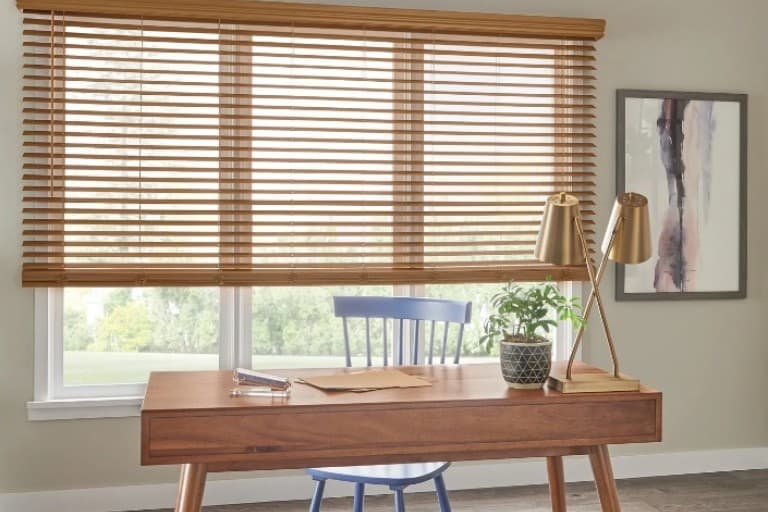
Planning your project
How much do custom blinds cost with installation?
Custom blind pricing depends on the window size, material, finish, and operating system. Start with the instant estimator for standard white faux wood blinds supplied through Premier Blinds & Shades. Real wood, other finishes, and Hunter Douglas, Alta, or Norman products need a separate quote.
We bring samples to your home in Coeur d’Alene, Post Falls, Hayden, Rathdrum, or Sandpoint, help you compare the options, and take the final measurements before ordering. Your quote includes professional installation backed by our lifetime installation guarantee.
Hunter Douglas · Seattle’s Eastside
Hunter Douglas Blinds on the Eastside
On Seattle’s Eastside, Luxe Window Works sells Hunter Douglas only, and blinds are a strong part of the line: Parkland® wood blinds, EverWood® faux wood blinds and Modern Precious Metals® aluminum blinds. We visit your home by appointment with samples, so you can compare slat sizes, finishes and controls in your own light. Measuring and installation are performed by Hunter Douglas Installation Services, Hunter Douglas’s own certified installation service, with measurements guaranteed for fit.
Eastside installations carry a one-year installation guarantee from the service, and your blinds carry the Hunter Douglas lifetime warranty.
Hunter Douglas consultations in your Eastside city: Bellevue · Kirkland · Sammamish · Issaquah · Renton · Maple Valley
The Problem
Most blinds don't fail because blinds are a bad product — they fail because the wrong material went into the wrong room. Big-box stores sell one-size-fits-all faux wood and let you sort out the rest. Then a few seasons later, the slats on that big south-facing window have bowed in the heat, the budget vinyl has yellowed, or real wood blinds in the bathroom have swelled and stopped tilting. North Idaho is especially hard on the wrong choice: freezing dry winters, intense summer sun on lake-facing glass, and 60-degree temperature swings between January and July.
The Solution
The fix is matching the material to the window. Faux wood blinds (PVC or vinyl) are lightweight and shrug off moisture — the right call for bathrooms, kitchens, and standard windows. Composite blinds (wood fiber blended with polymer) are heavier and more rigid, holding their shape under heat and UV on large, sunny windows where faux wood would eventually sag. Real wood blinds deliver the warmth and natural grain nothing else matches, ideal for dry living rooms and bedrooms. We carry premium lines from Norman, Alta, and Lafayette, in 2-inch and 2.5-inch slat sizes, with cordless and child-safe lift options. Every set is custom-measured to your exact opening and installed precisely.
Installer's Insight
“After 24 years installing blinds across the Pacific Northwest, here's what I tell every client: the slickest catalog photo doesn't matter if the material is wrong for your window. I've pulled faux wood blinds out of west-facing living rooms that developed a visible bow after just 3-5 summers — the PVC softens in the heat and gravity does the rest. On those big, bright windows I steer people to composite; I've taken composite slats out after 10-plus summers of direct sun and they were still dead straight. For bathrooms and kitchens it flips — faux wood's moisture resistance is unbeatable and you won't overload the lift mechanism with weight. And one upgrade most people overlook: 2.5-inch slats instead of the standard 2-inch. Fewer, wider slats mean a clearer view, a lower stack height when raised (2-3 more inches of exposed glass), and a clean, plantation-shutter look at a fraction of the cost.”
Key Features
- Real wood, faux wood (PVC/vinyl), and composite blinds
- Horizontal blinds in 2-inch and 2.5-inch slat sizes
- Faux wood: excellent moisture resistance for baths and kitchens
- Composite: superior heat and UV stability for large, sunny windows
- 2.5-inch slats — wider view, lower stack height, plantation-shutter look for less
- Cordless and child-safe lift options
- Premium brands: Norman, Alta, and Lafayette
- Custom-measured and professionally installed
Ideal For
- Bathrooms and kitchens where moisture would warp real wood (faux wood)
- Large west- or south-facing windows with heavy sun (composite)
- Living rooms and bedrooms wanting genuine wood warmth (real wood)
- Modern homes wanting wide-slat, clean-line styling (2.5-inch)
- Rentals and budget-conscious rooms that still want the wood look
- Any window where precise, everyday light and privacy control matters
Why Blinds in Northern Idaho
North Idaho's climate punishes the wrong blind material — but rewards the right one. On the bright, lake-facing picture windows common around Coeur d'Alene and Sandpoint, composite blinds hold their shape through summers that bow lesser slats. In bathrooms and lakefront homes with constant humidity, faux wood keeps performing where real wood swells. We match the material to each window's exposure and room — carrying Norman, Alta, and Lafayette so the recommendation is driven by your home, not by whatever a catalog pushes hardest.
Helpful reading before you decide
What happens during the free in-home consultation
We come to your home across Coeur d'Alene, Post Falls, Hayden, Rathdrum, and Sandpoint. We look at the windows, bring samples for blinds, and explain what will actually work in each room — light, privacy, heat, and how you use the space. There is no showroom visit. The consultation is free, and requesting one is not a booked appointment. You pick a time after we talk, or you can choose a time on the booking page.
Common Questions About Blinds
Do you offer custom blinds and installation in Coeur d’Alene and Post Falls?
Yes. Luxe brings samples to your home, helps you choose the material and controls, takes final measurements, and installs your custom blinds. We serve Coeur d’Alene, Post Falls, Hayden, Rathdrum, and Sandpoint. The in-home consultation is free.
Can I get a custom blind estimate online?
Yes, for select standard white faux wood blinds supplied through Premier Blinds & Shades. The estimate includes consultation, measurements, and installation. Sales tax and any applicable shipping or tariff surcharges are additional. Other materials, finishes, and Hunter Douglas, Alta, or Norman products are quoted separately.
Faux wood vs. composite blinds — which holds up better in North Idaho?
Both outperform real wood in our climate, but they're not identical. Faux wood (PVC/vinyl) is lightweight and excellent against moisture, ideal for bathrooms, kitchens, and standard windows up to about 6 feet wide. Composite (wood fiber + polymer) is heavier and more rigid, with superior heat and UV resistance — it holds its shape on large, sunny windows where faux wood can bow over a few summers. For big west- or south-facing glass, choose composite; for moisture-prone or budget-conscious rooms, faux wood gives you about 90% of the benefit for less.
Will faux wood blinds sag or bow in the sun?
They can — on large windows with prolonged direct sun. PVC softens under sustained heat, and on wide spans gravity slowly bows the slats over 3-5 summers. It's not catastrophic, but it's noticeable. That's exactly why we recommend composite for big, bright, west- or south-facing windows: the wood-fiber core gives the slats structural memory so they stay straight. On standard or shaded windows, faux wood holds up fine.
What's the difference between 2-inch and 2.5-inch blind slats?
2.5-inch slats are the upgrade most people don't know to ask for. Fewer, wider slats mean less visual interruption (about 8-9 slats across a window instead of 10-12), a clearer view outside, and a roughly 20% lower stack height when raised — 2-3 more inches of exposed glass. They also replicate the clean, structured look of plantation shutters at a fraction of the cost. The trade-off is minor: slightly more light seepage when tilted, and a bit more recess depth needed for a flush inside mount.
Are blinds a good choice for bathrooms and kitchens?
Yes — as long as you use faux wood or composite, not real wood. Faux wood blinds resist steam and humidity beautifully; I've installed them in bathrooms that steam up daily for years without warping. Real wood, by contrast, will swell and eventually stop operating smoothly in those rooms. For kitchens and baths, faux wood is the practical, long-lasting choice.
Can blinds be made cordless for child and pet safety?
Yes. We offer cordless lift options across our blind lines, which eliminate the exposed pull cords that pose a strangulation hazard to children and pets. Cordless operation is a straightforward, affordable safety upgrade — and in many rental situations it's now the expected standard. We'll walk you through cordless and motorized options during your consultation.
Should I choose real wood or faux wood blinds?
Real wood blinds offer unmatched natural grain and warmth, and they're the premium choice for dry living rooms, bedrooms, and home offices. Faux wood mimics the wood look at a lower price while resisting moisture and handling abuse better — the smarter pick for bathrooms, kitchens, rentals, and high-traffic rooms. The deciding factors are usually the room's moisture level, the window's sun exposure, and your budget. We help you weigh all three for each window rather than defaulting to one material everywhere.
Ready to See What Blinds Can Do in Your Home?
Start with our free concierge consultation to get personalized recommendations, or call us directly to schedule a free in-home visit.