
Cellular vs. Roller Shades: Which One Belongs on Your Windows?
Cellular shades insulate. Roller shades disappear. The short version: choose cellular where comfort and energy are the problem, roller where the view and clean lines are the point, and expect a well-planned house to use both.
By Mark Abplanalp
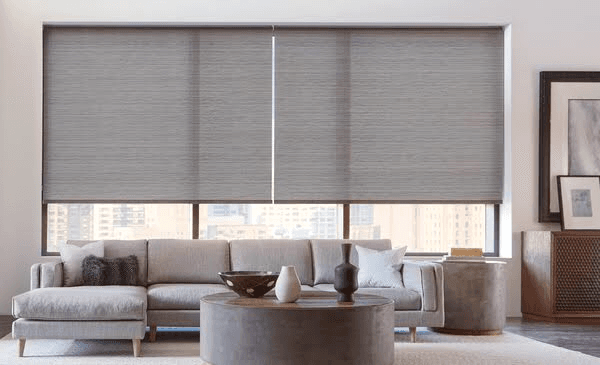
Cellular shades insulate. Roller shades disappear. That is the whole comparison in one line, and everything below is detail. Choose cellular where comfort and energy bills are the problem: bedrooms, drafty rooms, windows that bake in summer or leak heat all winter. Choose roller where the view and clean lines are the point: living rooms with glass worth looking through, kitchens, modern spaces. Most houses we spec end up with both, room by room, and that is not indecision. It is each shade doing the job it is actually good at.
| | Cellular (honeycomb) | Roller | |---|---|---| | Insulation | The best of any shade. Air pockets trap heat in winter and block it in summer | Minimal. Blocks sun, does not insulate | | Summer heat gain | Cuts it at the glass, up to 60% with a tight fit | Solar fabrics cut gain while keeping the view | | Light control | Sheer to blackout, always diffused softly | Sheer to blackout, the widest fabric range of any shade | | True blackout | Yes, with blackout fabric; best with side channels or LightLock | Yes, with blackout fabric; best with side channels | | View when open | Compresses to a compact stack at the top | Rolls away to almost nothing | | Look | Soft, textured, tailored | Flat, minimal, architectural | | Moisture rooms | Not ideal in steamy bathrooms; cells can hold moisture | Excellent. Wipeable fabrics handle kitchens and baths | | Sound | Absorbs some outside noise | Little effect | | Price position | Comparable to roller at entry level; premium tiers run higher | Comparable at entry level; designer fabrics run higher | | Motorization | Yes, including PowerView on Hunter Douglas Duette | Yes, including PowerView on Hunter Douglas roller lines |
Insulation: where cellular wins outright
A cellular shade is a honeycomb of fabric cells, and each cell traps a layer of still air against the glass. Still air is insulation. The U.S. Department of Energy's research on window attachments found that tightly installed cellular shades can reduce heat loss through windows by 40% or more in winter and cut unwanted solar heat gain by up to 60% in summer, and that cellular coverings achieve higher energy savings than other shading types. No roller shade can match that, because a flat sheet of fabric has no air to trap. Our energy efficiency guide breaks down what those numbers mean on real bills, and the cellular shade guide covers cell sizes, double-cell construction, and where the return on investment is fastest.
The honest roller counterpoint: if the problem is glare and heat pouring through west-facing glass in the afternoon, a solar roller fabric solves it while keeping the view, and it costs less than insulating a window that did not need insulation. Insulation is cellular's superpower, not a requirement for every window in the house.
Light, views, and blackout: where roller wins
Roller shades offer the widest fabric spectrum in the business, from sheers that barely tint the light to full blackout, including solar fabrics with precise openness percentages. A roller also gets out of the way like nothing else: open, it is a roll a few inches deep, and the window is a window again. A cellular shade open is a compressed stack at the top of the frame, tidy but present. On a wall of glass facing the water or the mountains, that difference decides the order.
For darkness, both can do it and neither does it with fabric alone. Blackout fabric blocks the light that hits it; the light that wakes you comes around the edges. Our blackout shades guide covers the full ladder, from well-fitted blackout fabric to sealed channel systems like Hunter Douglas LightLock on Duette, which is cellular's trump card in a bedroom: the best-insulating shade is also available as the darkest one.
Room-by-room verdicts
Bedrooms and nurseries: cellular. Insulation, soft light, some sound absorption, and blackout versions that seal properly. This is cellular's home turf.
Living rooms with views: roller. Solar or light-filtering fabric, glare handled, view intact, shade gone when open. If the same room runs cold in winter, cellular in a light-filtering fabric is the compromise, and it is a good one.
Kitchens and bathrooms: roller. Steam, splashes, and cooking film are hard on honeycomb cells and easy on a wipeable roller fabric.
Media rooms: either, sealed. Pick the look you like, then spend the money on blackout fabric and side channels instead of the shade style. Darkness is a hardware question here, covered in the blackout guide.
Home offices: depends on the window. North-facing and glare-free, roller in a solar fabric keeps the screen readable and the view open. A cold, drafty office is a cellular job.
Sliding and patio doors: neither is the first answer. Vertical applications want their own solutions; our patio door guide covers what actually works there.
What each one costs
At entry level the two are priced close. In our instant estimator, a standard 36 by 60 inch window starts around $130 to $190 for either type in light-filtering or blackout fabric, before options, and those are prices for shades you can actually buy. Custom and premium lines run higher: our cellular guide puts quality cellular at roughly $200 to $800 per window depending on size, fabric tier, and construction, with premium cell-in-cell fabrics adding about $200 to $400 per window, and designer roller fabrics land in the same territory. Motorization adds roughly $215 to $265 per shade at entry level. What moves the price most is rarely the shade type. It is size, fabric tier, and options, in that order, which is why the consultation measures first and quotes second.
Both types motorize well. Hunter Douglas Duette cellular and the Hunter Douglas roller lines run on PowerView, with schedules and scenes, and our PowerView guide covers the controls. Battery motorization on entry lines is covered in our motorized shade cost guide.
Where we fit and install
We serve homeowners in Post Falls, Coeur d'Alene, Hayden, Rathdrum, and Sandpoint. North Idaho installations are handled by our own team, with a lifetime installation guarantee. Book a free in-home consultation and we will spec each room on its own merits, cellular where it earns its keep, roller where it looks right.
On Seattle's Eastside, we bring the same comparison to Bellevue, Kirkland, Issaquah, Sammamish, Renton, and Maple Valley by appointment, with Hunter Douglas Duette cellular and Designer roller lines, and measuring and installation coordinated through Hunter Douglas Installation Services. See how Eastside service works.
Sources and further reading
Energy figures: U.S. Department of Energy, Interior Cellular Shades factsheet; Oak Ridge National Laboratory, Pulling the Shades for Energy Savings. Prices: our instant estimator and cellular shade guide, both published on this site.
Common questions
Which is better, cellular or roller shades?
- Neither is better in general; they are good at different jobs. Cellular shades insulate better than any other shade and suit bedrooms, nurseries, and rooms that run cold or hot. Roller shades offer the widest fabric range and roll away to almost nothing, which suits living rooms with views, kitchens, and modern spaces. Most homes end up with both, chosen room by room.
Do cellular shades really save energy?
- Yes, when they are fitted tightly. The honeycomb cells trap still air against the glass, and U.S. Department of Energy research found that cellular shades can reduce heat loss through windows by 40% or more in winter and cut unwanted solar heat gain by up to 60% in summer. Roller shades block sun but do not insulate, so the savings difference is real on windows with a temperature problem.
Which shade is better for blackout?
- Both come in blackout fabrics, and either one blocks the light that hits the fabric. Complete darkness depends on the edges: side channels and bottom seals stop the light that leaks around any shade. Hunter Douglas Duette cellular shades offer the LightLock channel system, and roller shades can be fitted with side channels as well. For a bedroom that must go fully dark, choose the style you prefer and spend on the sealing hardware.
Are roller shades cheaper than cellular shades?
- At entry level they are priced close: in our instant estimator a standard 36 by 60 inch window starts around $130 to $190 for either type before options. Premium lines overlap as well, with quality cellular commonly running $200 to $800 per window depending on size and fabric tier. Size, fabric, and options move the price more than the shade type does.
Which is better for kitchens and bathrooms?
- Roller shades. Their fabrics tolerate steam, splashes, and cooking film, and most wipe clean with a damp cloth. Cellular shades can trap moisture and odors inside the honeycomb cells, which makes them a poor fit for steamy bathrooms and busy kitchens.
Can cellular and roller shades both be motorized?
- Yes. Both types are available with battery or wired motorization, and the Hunter Douglas versions, Duette cellular and the Designer roller lines, run on PowerView automation with remotes, app control, scenes, and schedules. Motorization adds roughly $215 to $265 per shade at entry level.