
Moisture-Proof Window Treatments for Kitchens, Bathrooms, and Lake Homes in Northern Idaho
Steam from your morning shower. Splashes from washing dishes. The constant humidity rolling off Lake Coeur d'Alene. Here's exactly which moisture-resistant window treatments hold up — and which ones fail fast.
By Mark Abplanalp
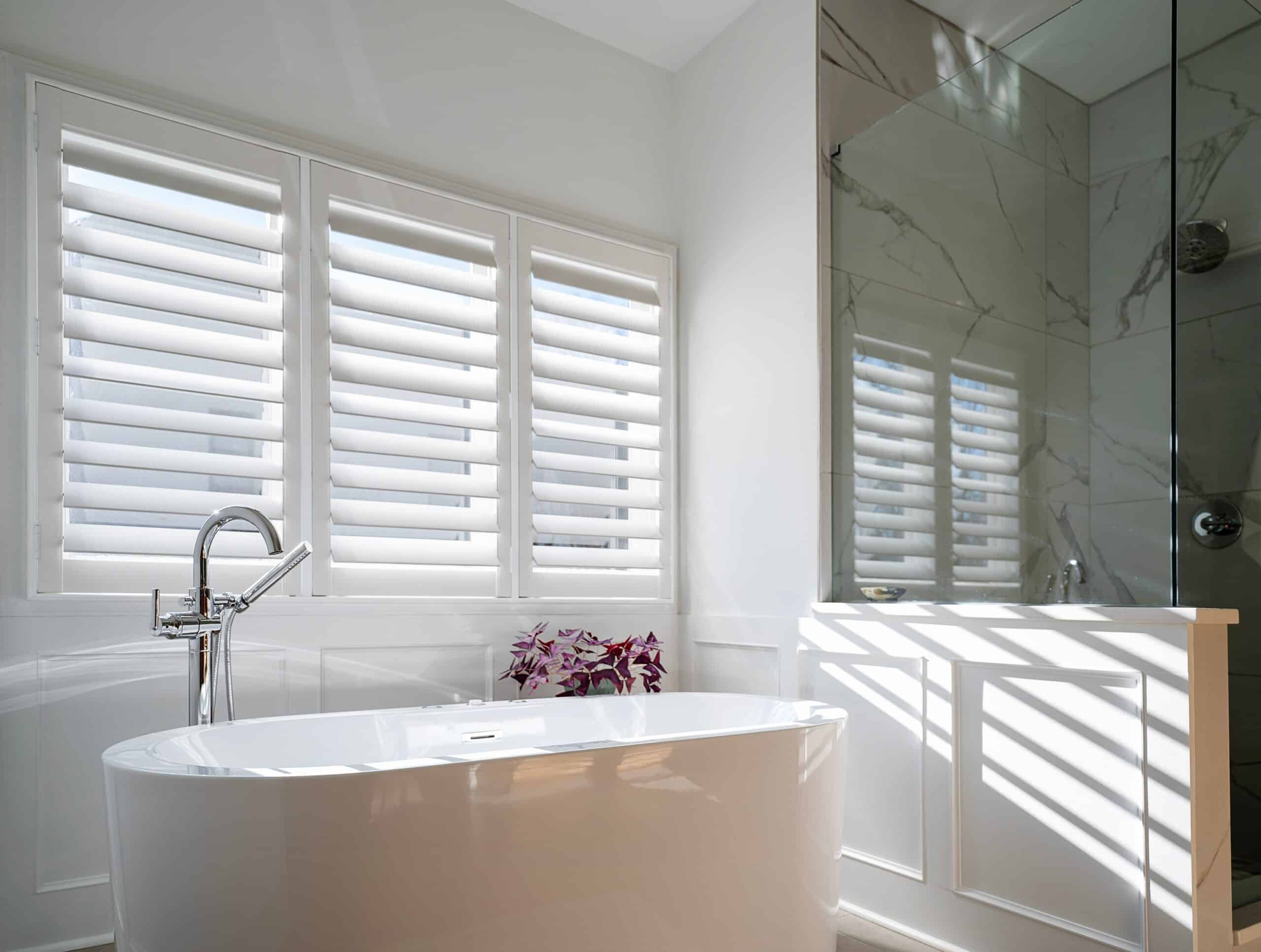
Steam from your morning shower. Splashes from washing dishes. The constant humidity rolling off Lake Coeur d'Alene. If you've installed the wrong window treatments in these spaces, you've probably already seen the damage — warped slats, peeling finishes, fabric that smells like mildew, or blinds that stick and won't open smoothly anymore.
Here in North Idaho, we deal with real four-season weather and plenty of moisture exposure, whether it's steam in your primary bath, splashes over the kitchen sink, or the humid air that comes with living near the water. The faux wood blinds that looked fine in the store? They start falling apart in six months. The fabric shades you loved? Now they're spotted and sagging.
This guide covers exactly which moisture-resistant window treatments hold up in high-humidity spaces, which materials fail fast, and how to choose the right solution for every wet zone in your home — from that window over your farmhouse sink to the wall of glass facing the lake.
What Moisture Actually Does to Window Coverings
Moisture doesn't just make things damp — it actively destroys the wrong materials. Understanding how each material fails helps you avoid a costly replacement cycle.
Real Wood Blinds
Real wood absorbs water vapor, which causes slats to swell, warp, and eventually crack. You'll see cupping along the edges and the blinds will stop closing flat. In a bathroom or over a kitchen sink, real wood can fail in under a year.
Low-Quality Faux Wood Blinds
Budget faux wood from big-box stores uses a composite core wrapped in a thin vinyl coating. When that coating has even a minor imperfection — and it always does — moisture seeps into the core. The core swells. The vinyl peels. You're left with blinds that look like they went through a flood.
Standard Aluminum or Metal Blinds
Metal blinds can rust and corrode, especially budget aluminum varieties. The finish flakes off and leaves brown streaks running down the slats. Not a great look in a kitchen or bathroom.
Fabric Shades and Drapes
Fabric absorbs moisture and holds it. Without proper ventilation, that turns into mildew — visible black spots and that unmistakable musty smell. Even washing them often doesn't fully eliminate the spores.
The good news: when you choose materials specifically engineered for moisture exposure, none of this happens.
Best Moisture-Resistant Window Treatments for Kitchens and Bathrooms
High-Quality Faux Wood Blinds (Not the Big-Box Kind)
This is where quality makes all the difference. Premium faux wood blinds use a solid polymer or composite material that's moisture-resistant all the way through — not just a thin vinyl wrap over a cheap core. These moisture-proof window blinds handle steam, splashes, and humidity without warping or peeling. The slats stay flat. The finish doesn't discolor. You can wipe them down with a damp cloth, and they look exactly the same five years later.
Best for: Windows directly above kitchen sinks, bathrooms with showers or tubs, laundry rooms, basement windows where humidity settles.
Important: The difference between a budget big-box faux wood blind and a properly engineered moisture-resistant blind is significant. One fails in months; the other lasts decades. The brands we carry — Alta, Norman, and Lafayette — are engineered for this.
Vinyl and Composite Plantation Shutters
Plantation shutters made from solid vinyl or waterproof composite material are about as bulletproof as moisture-resistant window treatments get. These shutters won't warp, swell, crack, or peel — even in a bathroom with poor ventilation or right next to a soaking tub. You can spray them down with cleaner, wipe them with a wet cloth, and they just keep performing year after year.
The louvers open and close smoothly. In a primary bathroom, you get a spa-like look with zero maintenance headaches.
Best for: Bathrooms with tubs or walk-in showers, kitchen windows where you want a clean high-end look, laundry rooms, mudrooms.
Note: The investment is higher than blinds, but for rooms with constant moisture exposure, shutters often end up being the most cost-effective choice long-term because they simply never need replacing.
Moisture-Resistant Roller Shades
Not all roller shades handle moisture well, but certain vinyl and coated fabric options are specifically engineered for wet environments. These moisture-resistant roller shades repel water instead of absorbing it. You can wipe them clean, they dry quickly, and they won't develop mildew or water stains. The rolling mechanism is sealed to prevent rust and corrosion.
You can get light-filtering options that offer privacy while letting in natural light, or blackout versions for bathrooms where you want complete coverage.
Best for: Bathroom windows where you want a softer look than blinds or shutters, kitchen windows near cooktops or sinks, laundry rooms.
Watch out: Make sure you're getting actual moisture-rated materials, not standard fabric shades installed in a humid space.
Marine-Grade Aluminum Shutters for Direct Water Contact
For a window actually inside a shower enclosure — where direct spray is unavoidable rather than occasional — aluminum shutters are the only honest answer. Marine-grade options use the same corrosion-resistant aluminum specified for coastal and boat applications, environments considerably harsher than any bathroom.
Construction is solid aluminum throughout with finishes chemically bonded to resist water and cleaning chemicals. No rust, no corrosion, no swelling. Louvers keep adjusting smoothly no matter the humidity, and the panel can be removed entirely for a deep clean.
The look is decidedly modern — clean lines, slim profiles, usually powder-coated. If your bathroom leans traditional they will fight the room. In a modern, transitional, or spa-style space they look deliberate.
Best for: Windows inside walk-in showers, wet rooms, and lakefront spa bathrooms where the glass gets sprayed daily. They are a premium investment, but for a shower window there is nothing else that lasts.
Window Treatments That Fail in High-Moisture Spaces
Real wood blinds do not belong in bathrooms, over kitchen sinks, in laundry rooms, or anywhere else with regular moisture exposure. They will warp. It's not a question of if, it's when.
The same goes for untreated fabric shades, fabric drapes, and woven wood shades in high-humidity zones. These materials absorb water vapor and create ideal conditions for mildew. Even in a bathroom with an exhaust fan, the concentration of steam during showers is too much for wood or fabric to handle between uses.
Save your beautiful wood blinds and fabric treatments for bedrooms, living rooms, and offices where moisture isn't a factor. In wet zones, stick to materials engineered to handle the conditions.
Moisture-Proof Window Treatments for Lake Homes Around Coeur d'Alene
If your home faces Lake Coeur d'Alene, Lake Pend Oreille, or any of the smaller lakes in our region, you're dealing with a unique combination of challenges: ambient lake humidity, large windows designed to capture those views, intense glare bouncing off the water, and UV exposure that fades flooring and furniture over time.
You need window treatments that handle moisture while still letting you enjoy the view you bought the house for.
Solar Shades and Screen Shades for Waterfront Windows
Solar shades and screen shades made with moisture-resistant materials give you glare control and UV protection without blocking your view. You can see the lake clearly during the day while reducing the harsh reflections that make it hard to use a laptop or watch TV near the water. These materials don't trap moisture or develop mildew, even in the humid air that comes with waterfront living.
Exterior Shades for Covered Decks and Patios
For covered patios and decks facing the water, exterior solar shades or zip screens protect your outdoor living space from wind, bugs, and direct sun while maintaining your view of the lake. These are built to handle full weather exposure, including the moisture that comes off the water year-round.
Layered Treatments for Lake-Facing Great Rooms
Inside your great room or dining area with floor-to-ceiling lake views, a layered approach works best — moisture-resistant solar shades for daytime glare control paired with motorized privacy shades or drapery for evenings. The key is choosing moisture-safe materials at every layer, because that lake air finds its way in regardless of the season.
UV Protection for Lakefront Investments
Those big view windows let in a lot of sun that will fade hardwood floors, leather furniture, and area rugs in a fraction of the time you'd see in a standard home. Quality solar shades from brands like Norman can block up to 99% of UV while maintaining your view — and they're made from materials designed to laugh at humidity.
Room-by-Room Guide: Moisture-Proof Window Treatments
Window Over the Kitchen Sink
Best options: High-quality faux wood blinds or vinyl plantation shutters. Both handle direct splashes and steam. Wipe them down while doing dishes and they stay looking new.
Also works: Moisture-resistant roller shades if you prefer a softer look. Choose light-filtering to keep the sink area bright.
Avoid: Real wood blinds, fabric shades, woven wood shades. They'll spot, warp, and need replacing within a year.
Primary Bathroom with Soaking Tub or Walk-In Shower
Best options: Vinyl or composite shutters for the luxury spa look with zero maintenance. Premium faux wood blinds are a strong second if shutters are outside the budget.
Also works: Moisture-resistant roller shades in blackout or room-darkening for complete privacy.
Avoid: Real wood blinds, fabric cellular shades, standard fabric drapes. These materials absorb steam and develop mildew fast.
Basement Bathrooms and Laundry Rooms
Best options: High-quality faux wood blinds offer durability and easy cleaning at a reasonable price point. These rooms often have smaller windows, so the investment is minimal.
Also works: Vinyl shutters if you want a permanent solution that never needs attention.
Avoid: Cheap faux wood from big-box stores. The coating will peel within six months in a basement environment where humidity settles.
Lake-Facing Great Room or Dining Area
Best options: Layered system — moisture-resistant solar shades for daytime glare and UV control, plus motorized privacy shades or drapery for evenings.
Also works: Screen shades alone if you primarily want view preservation with some glare reduction.
Avoid: Standard fabric shades or untreated materials. Even if the room itself isn't wet, the ambient humidity from lake air will eventually cause problems.
Ventilation: The Part Nobody Budgets For
The best material in the world fails early if the humidity never leaves the room. Two of the three worst moisture failures I have been called out to were material problems on paper and ventilation problems in reality.
Run the fan longer than you think
Twenty minutes after the shower stops, minimum. That single habit does more for your window coverings — and your paint, and your trim — than any upgrade on this page.
Give the treatment airflow
Position treatments so air from the vent or fan can actually reach them. A pocket of humid air trapped behind closed shutters is where mildew starts, and it starts there even on materials that are rated for the room.
Consider a humidity-sensing fan
Fans that switch themselves on above a set humidity threshold remove the human factor entirely. It is a small upgrade that protects the whole bathroom, not just the window.
Keeping Them Performing
Wipe down after steam
A soft damp cloth, especially after a hot shower. This clears mineral residue before it hardens and stops mildew getting a foothold.
Skip the harsh cleaners
No bleach and no ammonia on faux wood, vinyl, poly, or aluminum finishes. They dull the surface and can break down the protective coating that makes the product moisture-resistant in the first place. Mild soap and water is genuinely the right answer.
Exercise the mechanism seasonally
Every few months, run each treatment through its full range. If anything feels stiff, a silicone-safe lubricant sorts it. Catching a tight mechanism early is the difference between a five-minute fix and a replacement.
Why Professional Measuring and Installation Matter in High-Moisture Spaces
Here's what happens when you handle this yourself: you measure the window, order something that looks good online, install it, and six months later you're dealing with warped blinds or mildew-spotted fabric. The money is gone, and you're starting over.
A local specialist who knows North Idaho homes and moisture conditions can walk into your space and immediately see factors you might miss — how much direct splash hits that window over the sink, whether your bathroom fan is actually venting properly or just recirculating humid air, how the morning sun hits your lake-facing windows and creates specific glare patterns.
We measure precisely, account for mounting depth, window frame irregularities, and clearance for handles or cranks. We recommend specific materials based on actual moisture exposure in that exact spot. And we install everything correctly so it operates smoothly and lasts.
You also get real manufacturer warranties backed by a local installer who will come out if there's ever an issue. That kind of support doesn't exist when you order online or from a big-box store.
FAQs: Moisture-Proof Window Treatments in North Idaho
Can I use real wood blinds in my bathroom?
No. Real wood blinds absorb moisture from steam and humidity, which causes slats to warp, crack, and eventually fall apart. Even with an exhaust fan, bathroom moisture is too much for wood. Use faux wood blinds or vinyl shutters instead.
What's the best window treatment for a window above the kitchen sink?
High-quality faux wood blinds made from solid polymer are your best option. They handle direct splashes and steam without warping or peeling, and you can wipe them down as needed. Vinyl shutters are also excellent if you want a more permanent solution.
Are faux wood blinds actually waterproof?
Premium faux wood blinds made from solid polymer or high-grade composite are moisture-resistant throughout the entire slat, not just on the surface. Cheap big-box faux wood has a thin vinyl coating over a particle board core that fails quickly in wet conditions. Quality brands like Alta, Norman, and Lafayette are built differently.
What window treatments work best in a lake home with large view windows?
Solar or screen shades made from moisture-resistant materials give you UV protection and glare control while preserving your lake views. For privacy at night, add motorized roller shades or drapery. Choose materials specifically rated for moisture exposure since lake homes have higher ambient humidity year-round.
How do I prevent mildew on my window coverings?
Use non-porous materials like vinyl, solid polymer faux wood, or moisture-resistant fabrics. Avoid real wood, untreated fabric, and woven materials in bathrooms, kitchens, and other high-moisture areas. Make sure exhaust fans are working properly, and wipe down your window treatments periodically to prevent buildup.
Do vinyl shutters look cheap compared to wood shutters?
Quality vinyl or composite shutters have a smooth, painted finish that looks virtually identical to painted wood shutters. Most people can't tell the difference in person. The advantage is they maintain that appearance permanently — no warping, cracking, or peeling, even in bathrooms and kitchens.
Can motorized shades be moisture-resistant?
Yes. Motorized roller shades can be ordered with moisture-resistant fabrics and sealed mechanisms that protect the motor from humidity. This is especially popular in lake homes with large window expanses where you want convenient control without sacrificing durability.
Work With a Local Moisture-Proof Window Treatment Expert
Every home in Northern Idaho has different moisture challenges. Your bathroom might have excellent ventilation. Your kitchen might get direct steam from a cooktop near the window. Your lake home might deal with humidity year-round.
At Luxe Window Works, we've spent 24 years helping North Idaho homeowners solve these exact problems. We come to your home — or offer a virtual consultation if that works better for your schedule — look at your specific spaces, and recommend products that will actually last. You'll get treatments that fit precisely, operate smoothly, and look great for years without warping, peeling, or developing mildew.
Proudly serving Coeur d'Alene, Post Falls, Hayden, Sandpoint, and Rathdrum.
Schedule your free consultation with Luxe Window Works, and let's find the right moisture-proof window treatment solution for your kitchen, bathrooms, and lake-facing spaces.
Call or Text: 208-660-8643
Brands we trust: Alta • Norman • Lafayette
About the Author
Mark Abplanalp
Mark Abplanalp is the owner of Luxe Window Works, a custom window treatment company serving Northern Idaho communities including Coeur d'Alene, Post Falls, Hayden, Sandpoint, and Rathdrum. With 24 years of hands-on experience measuring, specifying, and installing window treatments in real homes, Mark has seen firsthand how the wrong materials fail in high-moisture environments — and how the right ones perform for decades.
Mark works exclusively with premium brands including Alta, Norman, and Lafayette, and backs every installation with a lifetime guarantee. His approach is straightforward: honest advice, precise measurements, and products that actually hold up to North Idaho's four-season climate.
When he's not helping homeowners solve window treatment problems, you'll find him mountain biking the trails around Post Falls or exploring the region in his Sportsmobile Sprinter van.
Have a question? Reach Mark directly at 208-660-8643 or mark@luxewindowworks.com
Common questions
What's the best moisture-resistant window treatment for a bathroom with a shower?
- Faux wood blinds and composite shutters are the most durable options for high-moisture bathrooms. Both can withstand repeated steam exposure without warping, cracking, or delaminating. Aluminum blinds work as well but have a more utilitarian appearance. Avoid real wood products and fabric-based treatments like cellular shades in rooms with direct shower steam—fabric absorbs moisture and develops mold, while real wood warps over time.
Can cellular shades be used in kitchens?
- Standard cellular shades are not recommended for kitchen windows directly above cooking surfaces where they'd be exposed to grease and steam regularly. For kitchen windows away from the stove—like over a sink or in a breakfast nook—cellular shades work fine with regular cleaning. If you want the insulating benefits of cellular construction in a kitchen, look for cellular shades with wipeable fabric facings rather than standard fabric.
What makes lake homes different when it comes to window treatment choices?
- Lake homes face a combination of high UV exposure from light reflecting off water, higher ambient humidity from proximity to the lake, and in North Idaho, significant snow reflection in winter that dramatically increases UV load. This combination accelerates fading, promotes mildew in fabric treatments, and stresses wood products. Solution-dyed fabrics that don't absorb UV damage and moisture-resistant materials outperform standard options significantly in these environments.
Do roller shades hold up in humid environments?
- It depends entirely on the fabric. Standard roller shades with woven or fabric faces can trap moisture and develop mildew in humid environments. Roller shades with vinyl or PVC-coated fabrics are moisture-resistant and easy to wipe clean, making them practical for bathrooms and kitchens. For lake homes, look for roller shade fabrics specifically rated for high-humidity environments and confirm the fabric is solution-dyed rather than piece-dyed for UV resistance.
How do I clean window treatments in a bathroom or kitchen?
- For faux wood and composite shutters, wipe with a damp cloth and mild soap—they can handle direct cleaning without damage. Aluminum blinds can be soaked and scrubbed if needed. Wipeable roller shade fabrics clean with a damp cloth. For any fabric treatments in kitchens, spot-clean grease immediately before it sets—grease that dries into fabric is very difficult to remove without damaging the fabric backing.
What's the lifespan difference between moisture-resistant and standard treatments in humid spaces?
- In high-moisture environments, the difference is substantial. Standard wood blinds in a bathroom might last 3–5 years before warping becomes obvious. Fabric cellular shades in the same environment might develop mildew issues within 2–3 years. Faux wood blinds, composite shutters, and appropriate roller shades in the same bathroom easily last 15–20+ years with basic maintenance. Choosing moisture-appropriate treatments isn't just about durability—it's about avoiding the health concerns that come with mold growing in treated fabric.
Are there window treatment options that work well in both the kitchen and connect to other living areas?
- For open-concept spaces where the kitchen flows into dining and living areas, solar shades or roller shades with matching fabrics create visual continuity while offering different functional options—light-filtering for living areas and wipeable fabric variants for kitchen windows. Shutters work similarly: the same shutter style can run throughout connected spaces with the kitchen getting composite (moisture-resistant) construction and other areas getting wood if preferred.
Have Questions About Your Windows?
Our team offers free in-home consultations throughout Northern Idaho. Get personalized advice for your specific situation.