The Layered Luxe Look: Combining Shutters with Motorized Shades for Ultimate Light Control and Energy Efficiency
For homeowners in Coeur d'Alene and Post Falls who refuse to choose between architectural beauty and flawless performance You can have shutters that stay open...
By Mark Abplanalp
For homeowners in Coeur d'Alene and Post Falls who refuse to choose between architectural beauty and flawless performance
You can have shutters that stay open and complete light control—here's exactly how the pros layer them for maximum comfort, energy savings, and design impact in Northern Idaho homes.
📘 The Complete Guides — Layered shutters + motorized shades sits at the intersection of two topics. For the broader motorization picture, see the master smart-shade comparison for Northern Idaho homes →
For shutter selection — frames, materials, configuration — see the Ultimate Shutter Guide for Northern Idaho Homes →
The Design Compromise: When Shutters Sacrifice Light and Efficiency
I'll never forget the call I got from a homeowner in Hayden three summers ago. She'd just installed gorgeous plantation shutters throughout her new build—custom-stained to match her trim, L-frame mounted for that clean, architectural look. About six weeks later, she reached me through her builder.
"Mark, I love how they look," she said. "But I'm closing the louvers every afternoon because the glare is killing us. And now my living room feels like a cave. I spent all this money on shutters just to keep them closed?"
That's the compromise nobody warns you about. Shutters are stunning when the louvers are open—they frame your view, add depth, create that high-end custom look that makes a house feel intentional. But the moment you need light control, privacy, or insulation, you're tilting those louvers shut and losing everything: your view, your natural light, your $8,000 investment in beauty.
And here's the thing most homeowners don't realize until it's too late: even when shutters are fully closed, they're not actually airtight. You'll still get light bleed around the edges (that "halo effect"), temperature transfer through the louvers, and if you're trying to darken a nursery or bedroom for sleep, you're fighting a losing battle.
So what do you do? Rip out the shutters? Live in the dark? Settle for "good enough"?
There's a third option—and it's the one I've been installing in high-end homes for over a decade.
The Luxe Layered Solution: Shutters + Motorized Shades
Here's the pro move: you don't choose between shutters and shades. You layer them.
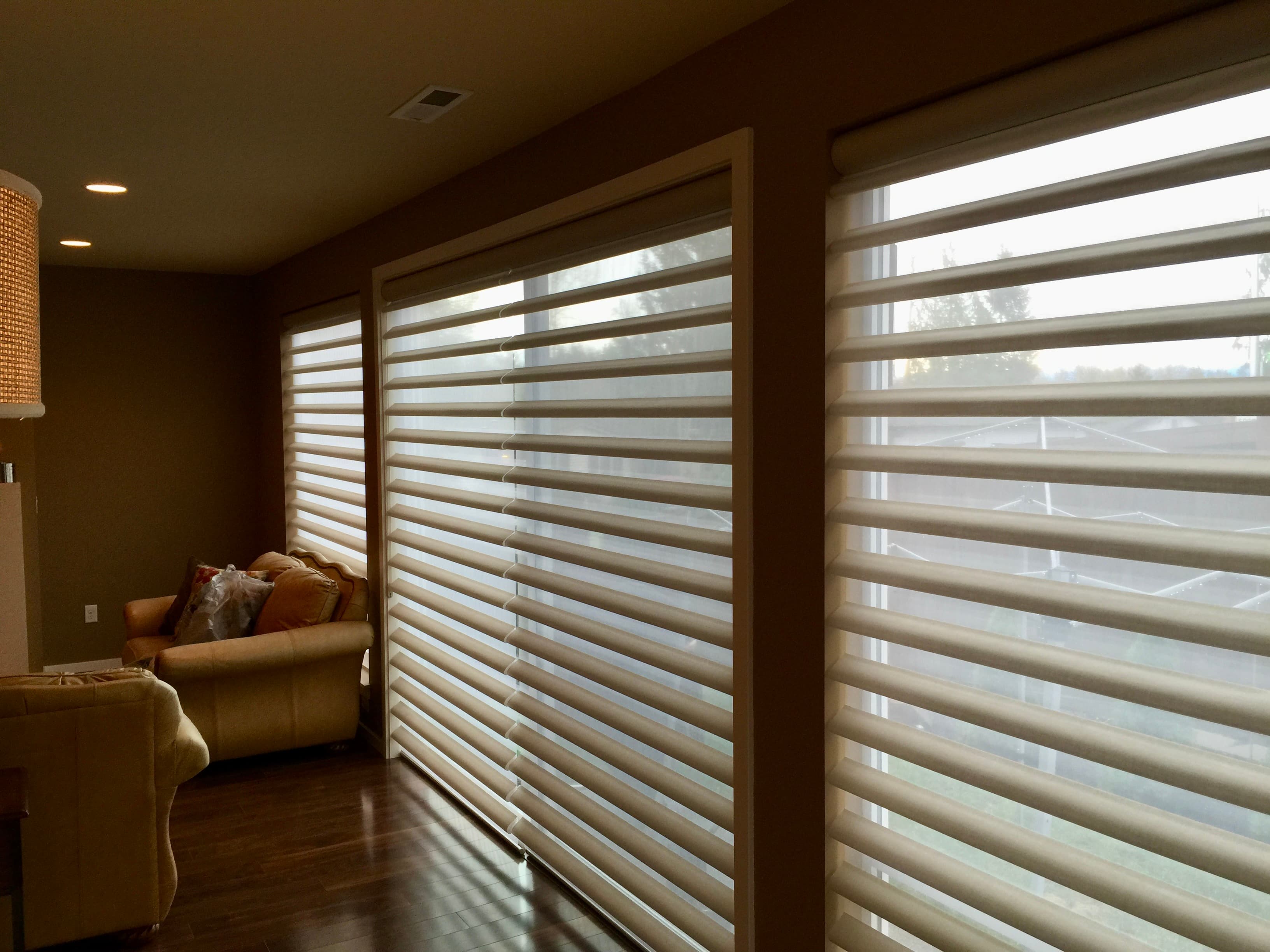
Specifically, you install outside-mount shutters (with an L-frame for maximum visual impact) and pair them with an inside-mount motorized shade that sits behind the shutter in the window opening. This gives you two independent systems working together: the shutter handles the aesthetics and stays open, while the shade manages light, heat, and privacy with zero compromise.
Let me be clear about one critical detail: not all shades work in this layered setup. Roller shades, when mounted inside the frame, create significant light gaps on the sides—sometimes a quarter-inch or more. That's fine for a casual living room where you're just softening glare, but if you're layering for performance, you need a shade that seals tight. That means cellular shades (also called honeycomb shades) for bedrooms and nurseries where light control and energy efficiency matter most.
And here's why motorization isn't optional: once you layer shutters and shades, reaching behind the shutter frame to manually adjust a cord or wand is clunky, frustrating, and defeats the entire purpose of the setup. Motorized shades let you control light with a tap, a voice command, or a programmed schedule—without ever touching the shutter.
The result? Your shutters stay open, looking beautiful. Your shades do the heavy lifting. And you get both worlds without compromise.
Performance Zone 1: Living Rooms, Light, and Energy Preservation
Let's start with the most common scenario: a west-facing living room in Coeur d'Alene.
If you've got large windows facing west, you know the drill. Mid-afternoon in July, that sun is relentless—glare on the TV, heat pouring through the glass, furniture fading. But you also don't want to live in the dark. You want natural light. You want your view of the lake, the pines, the mountains. You want your home to feel open.
This is where the layered setup earns its keep.
You install outside-mount plantation shutters with an L-frame. The shutters stay open, louvers tilted for privacy or view as you prefer. Behind them, mounted inside the window frame, you add a motorized light-filtering or solar roller shade.
During the day, the shade drops to block UV rays and soften glare, but still lets filtered daylight through. The shutters remain open, so from the interior, you still see the beautiful frame, the custom finish, the architectural detail. From the outside, your home looks cohesive and elevated—not a patchwork of half-closed shutters.
The energy benefit here is real, especially in Northern Idaho where our summer afternoons can hit 95° and our winter mornings drop to 10°. That inside-mount shade creates an insulating air pocket between the glass and the room, reducing heat gain in summer and heat loss in winter. Your HVAC doesn't have to work as hard, and your comfort is instant.
And because it's motorized, you're not adjusting it manually five times a day. Program it to lower at 2 PM when the sun hits, raise at 6 PM when the light softens. Or link it to your smart home system and let it respond to temperature or time automatically.
This is the energy-efficient window combination for daily living—beauty on display, performance in the background.
Performance Zone 2: Nurseries, Bedrooms, and Eliminating the Halo Effect
Now let's talk about the rooms where light control isn't a preference—it's a requirement.
Nurseries. Primary bedrooms. Guest rooms where you actually want guests to sleep past sunrise in June when the sun comes up at 5:30 AM.
This is where the layered shutter-and-shade combination goes from "nice to have" to "I can't believe we lived without this."
Here's the setup: same outside-mount shutters with L-frame. But instead of a light-filtering shade, you install a motorized room-darkening cellular shade on the inside mount.
Cellular shades have a honeycomb structure that traps air, creating an insulating barrier that's measurably more effective than a roller shade. In a nursery, that means better temperature control and—critically—sound dampening. If you've got a baby who wakes up to every truck that drives by or every dog that barks, that cellular structure absorbs more noise than a flat fabric shade ever could.
But here's the real magic: when you combine a room-darkening cellular shade with a shutter, you almost completely eliminate the halo effect.
Shutters alone will always have light bleed—around the frame, through the louver gaps, along the edges. Room-darkening shades alone will have side gaps, especially if they're roller style. But layer them? The shade blocks the direct light, and the shutter frame blocks the perimeter light bleed. The result is as close to true blackout as you can get without installing blackout curtains and ruining your design aesthetic.
I installed this exact combination in a Post Falls home last fall—mom and dad had a six-month-old who wouldn't nap unless the room was pitch dark, but they didn't want to sacrifice the beautiful shutters in the nursery. We added a motorized cellular shade in a blackout fabric. Now, one tap on her phone and the room is dark enough for a 2 PM nap, even in July. When the baby's awake, the shade goes up, shutters stay open, and the room feels bright and welcoming.
And because it's cellular, the room stays 3–5 degrees cooler in summer and warmer in winter compared to shutters alone. That's not marketing—it's measurable on a thermostat.
Luxe Window Works Q&A: Your Layered Living Questions Answered
Q: Why do the shades need to be motorized? Can't I just use a cord or wand?
You can, but you won't. Once the shutters are installed with an L-frame, reaching behind them to pull a cord or twist a wand is awkward, and most homeowners just stop using the shade altogether. Motorization ensures you'll actually use the system the way it's designed—which means you'll get the comfort, energy savings, and light control you paid for.
Q: I already have shutters installed. Can I add a motorized shade behind them?
In most cases, yes—as long as your shutters are outside-mounted or mounted with an L-frame that leaves the window opening clear. If your shutters are inside-mounted (sitting in the window frame itself), there's no space to add a shade. This is exactly why we plan for layering before the shutters go in. If you're unsure, a quick in-home measurement will tell you what's possible.
Q: Which shade material offers the best noise reduction for a nursery?
Cellular shades, hands down. The honeycomb structure traps air and dampens sound better than any roller or Roman shade. If noise is a priority—street traffic, neighbors, barking dogs—go cellular. Pair it with shutters and you've got both sound dampening and near-blackout performance.
Mark's 3 Pro Tips for Layered Perfection in Northern Idaho
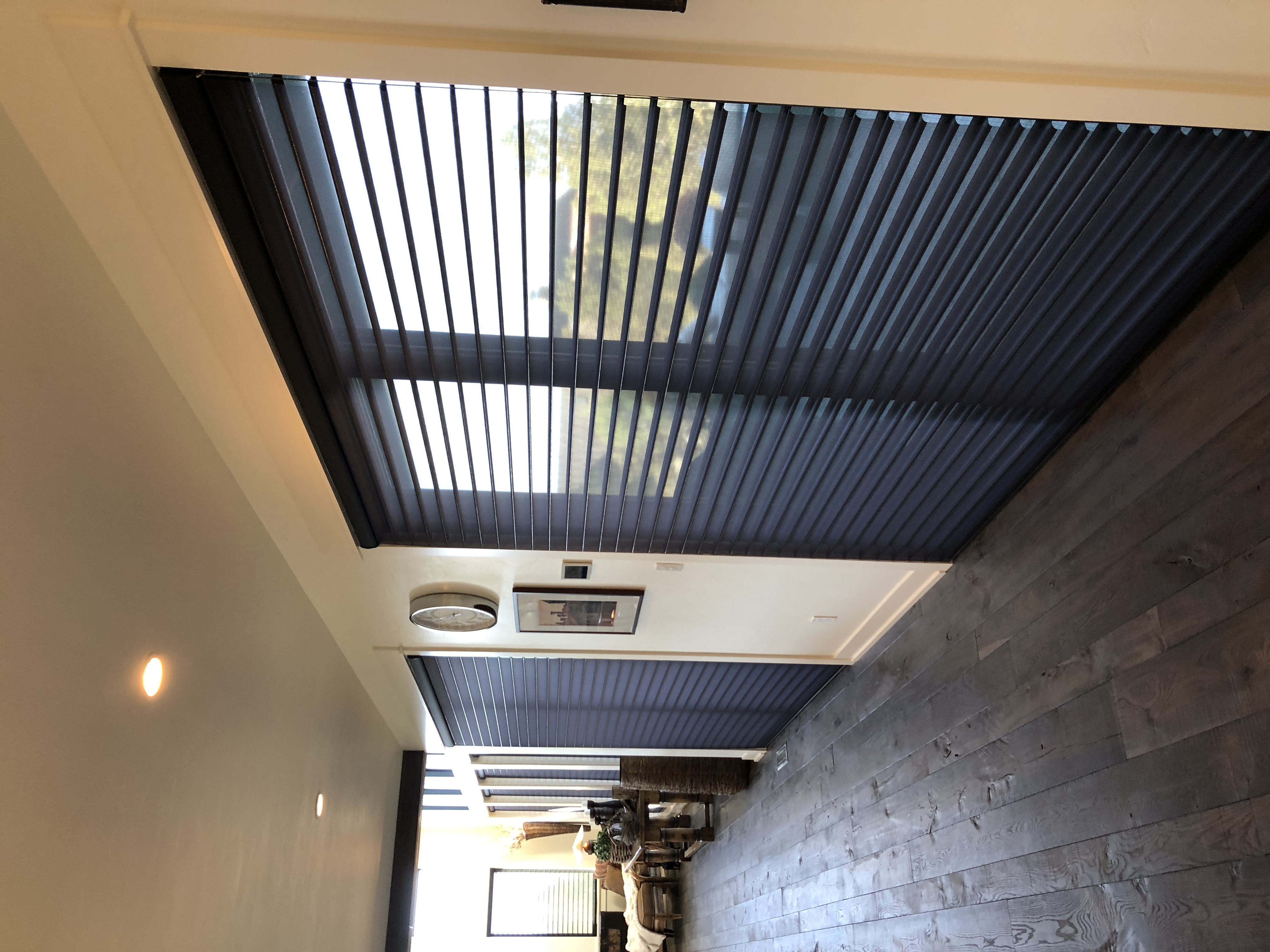
Tip 1: Always choose motorized shades for a layered application.
Manual operation defeats the purpose. You'll either stop using the shade or you'll get frustrated every time you adjust it. Motorization ensures the system works with your lifestyle, not against it.
Tip 2: Confirm your shutter style before ordering.
If you're planning to layer, make sure your shutters are specified as outside-mount with an L-frame. This leaves the interior window opening clear for the shade. If your installer defaults to inside-mount shutters, speak up—you'll lose the ability to add a shade later.
Tip 3: For nurseries and bedrooms, choose cellular over roller.
Cellular shades offer better insulation, superior sound dampening, and tighter light control when paired with shutters. Roller shades work fine for living rooms and light filtering, but if you're serious about blackout performance and energy efficiency, cellular is the only choice.
The Best of Both Worlds—Without Compromise
For 24 years, I watched homeowners struggle with the same frustrating tradeoff: shutters that look beautiful but don't perform, or shades that perform but don't wow.
The layered approach solves that. You get the architectural beauty of custom shutters—always open, always framing your view—paired with the flawless light control, energy efficiency, and smart-home convenience of motorized shades working quietly in the background.
It's not the cheapest window treatment option. But if you're building or remodeling a home in Coeur d'Alene or Post Falls and you're serious about design and performance, it's the smartest one.
Ready to stop compromising? Schedule your free in-home conhttps://luxewindowworks.com/explore-motorized-shades-plantation-shutters-have-a-question-lets-start-the-conversation/sultation and let's design a layered solution that works for your home, your windows, and your life in Northern Idaho.
Proudly serving Northern Idaho!
https://luxewindowworks.com/window-coverings-sandpoint-id/
https://luxewindowworks.com/window-coverings-coeur-d-alene/
https://luxewindowworks.com/window-coverings-post-falls-id/
https://luxewindowworks.com/window-coverings-hayden-id/
https://luxewindowworks.com/window-coverings-rathdrum-id/
Luxe's Favorite Brands!
Common questions
Can plantation shutters and motorized shades really work together in the same window?
- Yes, and it's one of the most effective window treatment combinations available. Shutters handle daytime light control and privacy while adding permanent architectural value. Motorized shades layer behind or in front of the shutters to provide blackout capability at night, additional insulation, or complete privacy when needed. The key is planning the installation so both treatments operate without interfering with each other—typically mounting the shade inside the window frame and the shutter frame outside it.
What's the cost difference between a layered system versus either treatment alone?
- A layered system costs more than either treatment alone, typically 60–80% more than just shutters or just motorized shades. However, you're getting functionality that neither treatment provides independently. Shutters alone can't achieve blackout. Motorized shades alone lack the permanence and light-control precision of shutters. For rooms like master bedrooms where you need both full daylight control and complete nighttime blackout, the layered approach delivers what no single treatment can match.
Does adding motorized shades affect the shutters' warranty or function?
- When properly planned and installed, layering treatments doesn't affect shutter warranties. The critical factor is ensuring the shade installation doesn't put mechanical stress on the shutter frame or interfere with the shutter's louver operation. A professional installer will assess the window dimensions and mounting options to ensure both treatments operate independently without compromising either one.
Have Questions About Your Windows?
Our team offers free in-home consultations throughout Northern Idaho. Get personalized advice for your specific situation.