
No, Corded Blinds Aren't Illegal in Idaho Rentals — Here's Why I'd Replace Them Anyway
There is no federal law requiring cordless blinds in your Coeur d'Alene or Post Falls rentals. The rule that would have created one was struck down in 2023. Here is what actually applies, and why I still replace every accessible cord I find in a rental.
By Mark Abplanalp
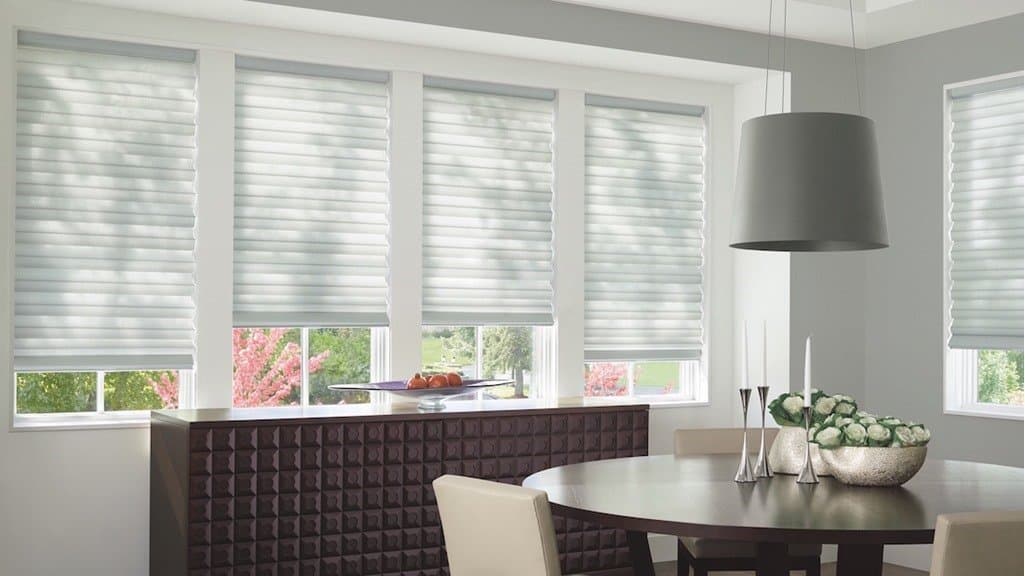
If you own Coeur d'Alene or Post Falls rental property, you have probably seen the warnings: a new federal law bans corded blinds, and landlords who ignore it are exposed.
That is not true, and you should be a little suspicious of anyone in my industry who tells you it is.
I am Mark Abplanalp. Here is what actually happened, what actually applies to your units, and why — knowing all of that — I still pull out every accessible cord I find in a rental.
What actually happened to the federal rule
In November 2022 the U.S. Consumer Product Safety Commission issued a rule setting a federal safety standard for operating cords on custom window coverings. The Window Covering Manufacturers Association challenged it immediately.
On September 12, 2023, the U.S. Court of Appeals for the D.C. Circuit vacated that rule. The court found the Commission had breached notice-and-comment requirements, relied on flawed data in its cost-benefit analysis, and set an arbitrary effective date. The matter went back to the CPSC, and there is no federal replacement in force.
So there is no federal law. There is also no Idaho statute and no Coeur d'Alene, Post Falls, Hayden, or Rathdrum ordinance requiring cordless window coverings in rental housing. Anyone selling you a compliance upgrade is selling you something that does not exist.
What does apply: the industry standard
What governs the products themselves is ANSI/WCMA A100.1-2022, the window covering industry's own safety standard. It is voluntary — no government enforces it — but the major manufacturers adopted it, and that is what actually changed the market.
The practical effect on you is real even though the legal effect is not. Stock blinds with long free-hanging pull cords have largely left the supply chain, because Norman, Alta, Lafayette and the rest build to the standard. When you go to replace a broken corded blind in a unit, you will mostly find cordless, short-cord, or motorized options waiting for you. The market moved on its own.
Why I still replace every accessible cord
Here is the honest version of the risk, with the scare tactics removed.
The hazard is real. Children die on window covering cords every year, and it takes only seconds and a short length of cord to form a fatal loop. That was true before the CPSC rule, it stayed true when the rule was vacated, and it is true today. A court decision about administrative procedure did not make anyone's window safer.
Your exposure as a landlord is real too — it is just not statutory. No law says you must replace corded blinds. But if a child is hurt on a cord in a unit you rent to a family, the question in front of a court is whether you took reasonable care given a hazard you knew about or should have known about. "No law required me to fix it" has never been a strong answer to that question. A published industry standard that your own suppliers follow is exactly the kind of thing used to establish what reasonable care looked like.
That is a weaker claim than "it's the law." It is also the true one, and it is the one I would want if I owned the building.
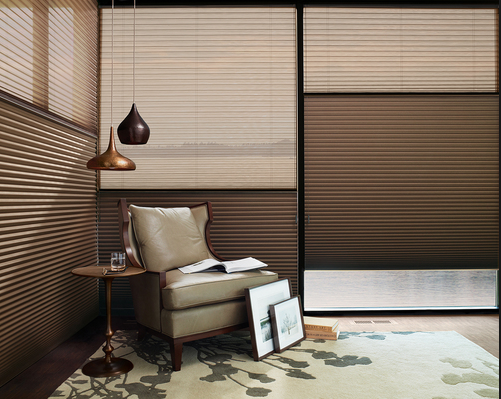
The failure I find most often: unattached cord tensioners
If you take one practical thing from this article, take this one.
Plenty of rentals have continuous cord loop systems — common on roller shades and vertical blinds. A continuous loop is safe only when its tension device is screwed firmly into the wall or window frame, holding the loop taut so it cannot form an open circle.
In the units I walk through, a high share of those tensioners are not attached to anything. Installed loose by a previous contractor, snapped off by a tenant, or left dangling behind the furniture. The safety component is present, visible, and doing nothing at all.
That is worse than an obviously corded blind, because everyone involved believes the window is already safe. If you inspect nothing else between tenants, inspect your tensioners.
The part that has nothing to do with safety
Cords are also the number one maintenance call on window coverings in rentals. They fray, tangle, snap, and get pulled out of alignment. A cordless blind runs on an internal spring or clutch with nothing hanging out of it to break.
- Fewer turnover replacements. Cordless systems outlast corded ones under tenant wear by a wide margin, and that shows up directly on your maintenance line.
- Better showings. In a competitive Post Falls rental property market, clean cordless treatments read as a well-managed unit. Tangled cords read as deferred maintenance, and prospective tenants price that in.
For most owners the cordless upgrade pays for itself on maintenance and turnover alone. The safety case is the reason to do it now rather than eventually.
Q&A for Northern Idaho property owners
Q: Am I legally required to replace the corded blinds in my existing units? A: No. There is no federal rule in force, no Idaho statute, and no local ordinance requiring it. What exists is a voluntary industry standard governing what manufacturers build, not what landlords must own. Replacing them is a risk-management decision rather than a compliance obligation — and I would rather you make that decision with accurate information.
Q: Can I still buy corded blinds? A: Mostly not, and not because they are banned. The major manufacturers build to ANSI/WCMA A100.1-2022 voluntarily, so free-hanging cords have largely left the catalog. You will find cordless, short-cord, and motorized options instead.
Q: What is the actual hazard with a continuous cord loop? A: The loop itself, but only when the tension device is not properly anchored. Fastened correctly, the cord stays taut and cannot form a circle. Broken, loose, or detached, it creates exactly the hazard the design was meant to eliminate — while still looking like a safety feature.
Q: What holds up best in a high-turnover rental? A: Cordless faux wood blinds or cordless roller shades. Faux wood takes abuse and still looks like a premium fixture; roller shades have almost nothing to break. For tall or hard-to-reach windows, motorization removes the cord question entirely.
How I would sequence it
- Family units first. If you rent to households with children under nine, those units come first. That is where the actual risk lives.
- Inspect every tensioner between tenants. If a continuous loop tensioner is not solidly anchored, replace the unit with a cordless product rather than reattaching it. A tensioner that came loose once will come loose again.
- Photograph what you change and date it. Not because a law requires the record, but because a record of when you removed a known hazard is genuinely useful if you are ever asked what care you took.
The safety standard shifted permanently even though the law did not. If you own rental property in Coeur d'Alene, Post Falls, Hayden, Rathdrum, or Sandpoint, the move worth making is the one you choose deliberately — not the one somebody frightened you into.
We will walk your units, flag every accessible cord and every unattached tensioner, and quote the fix. No compliance deadline, because there isn't one. Book a consultation or call us and we will tell you honestly which units need attention first.
Sources
Window Covering Manufacturers Association v. CPSC, No. 22-1300 (D.C. Cir., September 12, 2023) · Federal Register: Safety Standard for Operating Cords on Custom Window Coverings
Common questions
Are corded blinds illegal in rental properties in Idaho?
- No, there's no Idaho state law or Coeur d'Alene/Post Falls ordinance specifically banning corded window coverings in rental properties. However, property owners and managers carry liability exposure if corded blinds cause injury, particularly to children. Some landlords proactively switch to cordless options to reduce that risk and liability, not because they're legally required to.
What's the most cost-effective cordless option for a multi-unit rental property?
- For budget-conscious rental property owners, cordless faux-wood blinds or basic cordless roller shades typically offer the best combination of cost, durability, and tenant satisfaction. They're priced similarly to corded alternatives, require no special maintenance, and hold up well to tenant use. For higher-end rentals where you want to command premium rents, cordless cellular shades add energy efficiency that can be a genuine marketing advantage.
If a tenant damages cordless blinds, who's responsible?
- Tenant responsibility for damaged window coverings depends on your lease language. If your lease specifies that tenants are responsible for damage beyond normal wear and tear, intentional damage or abuse of cordless mechanisms would typically fall under tenant liability. Normal wear—fabric fading, minor mechanism wear from regular operation—is generally considered landlord responsibility. Document the condition of window coverings at move-in with photos to protect yourself in disputes.
Have Questions About Your Windows?
Our team offers free in-home consultations throughout Northern Idaho. Get personalized advice for your specific situation.